10K vs. 14K vs. 18K vs. 24K Gold: A Jewelry Buying Guide
Posted by Gregorio Diamonds on Oct 14th 2026
By Gregorio Diamonds · Gold guide
A gold chain can become the piece you reach for every morning. A ring might mark an anniversary, a promise, or a gift you have been thinking about for months. As you compare 10K, 14K, 18K and 24K gold, start with what the numbers tell you: the proportion of gold in the metal.
Then think about how the jewelry will be worn. With the holidays ahead, October is a good time to compare the look you love with the construction, care and budget that suit your life.
Gold karat and purity at a glance
Karat measures gold content on a scale of 24 parts. Gold alloys mix gold with other metals. A higher karat number means a greater proportion of gold, although it does not describe the entire quality of a finished piece.
| Karat | Gold content | Marks you may see |
|---|---|---|
| 10K | Approximately 41.7% | 10K or 417 |
| 14K | Approximately 58.3% | 14K, 583 or 585 |
| 18K | 75% | 18K or 750 |
| 24K | Nominally pure gold
Check the stated fineness.
|
24K; fineness marks such as 999 or 999.9 |
These percentages are rounded karat fractions. A fineness mark states parts per thousand: 585 means 58.5% gold, while 999 means 99.9%. For 24K jewelry, check the stated fineness rather than assuming absolute chemical purity.
Further reading: World Gold Council guide to gold purity and fineness.
How 10K, 14K and 18K fit everyday jewelry
These are familiar choices in U.S. jewelry shopping. They offer different proportions of gold and alloying metals, giving you several starting points for a daily piece.
- 10K gold contains more other metals than gold. It can be worth comparing when you want a gold-alloy piece with a lower gold-content cost. Compare similar designs and weights before drawing a price conclusion.
- 14K gold is a useful starting point when you want to balance gold content with practical wear. Look at the specific alloy, thickness and construction of the piece.
- 18K gold contains three-quarters gold and appeals to shoppers who prioritize higher gold content. It is also used for everyday jewelry, provided the design and care suit the wearer.
Higher purity generally means softer gold, but the alloy recipe and manufacturing treatments, including work hardening, can change its properties. Thickness, setting design and craftsmanship also matter. A karat chart cannot guarantee which finished piece will resist damage best.
For a ring, tell the jeweler whether you work with your hands, prefer a low setting, or tend to catch jewelry on clothing. Discuss the actual piece and when to remove it.
Further reading: GIA on ring materials for everyday wear and Goldsmiths' Company Assay Office paper on jewelry alloys.
High-purity gold and jewelry traditions
High-purity gold has an important place in jewelry traditions. Although it sits outside our main comparison, 22K contains approximately 91.7% gold and has a longstanding role in Indian jewelry. Pure-gold jewelry, often described as 24K, also has an established place in China.
Traditional high-purity gold is softer and may bend or show wear more readily, so a delicate everyday ring deserves particular thought. That does not make all 22K or 24K jewelry unsuitable to wear. The form of the piece, how it is made and its place in the wearer's routine matter. Modern hard-pure-gold manufacturing provides another reason to ask about the specific product.
If a family tradition or cultural preference draws you to higher purity, bring that into the conversation. Choose with an understanding of care and construction. A 24K label alone does not make jewelry a suitable investment or promise a return.
Further reading: World Gold Council on jewelry preferences in India and hard-pure-gold jewelry in China.
What about gold below 10K?
Common U.S. shopping choices and legal labeling rules are different things. The FTC removed its former 10K threshold in 2018, and its current Jewelry Guides explicitly include accurately described 9K gold. It would be outdated to call 10K the universal U.S. legal minimum.
Standards also vary internationally. For example, 9K gold is a recognized UK hallmarking standard, while 8K is recognized in Denmark. A lower-karat alloy can be genuine gold alloy throughout; its smaller gold proportion does not turn it into gold-filled or gold-plated jewelry.
Further reading: current FTC guidance on gold descriptions, UK hallmarking guidance and Denmark's fineness guidance.
Karat, plating and hollow construction answer different questions
Gold-filled jewelry has a gold-alloy layer mechanically bonded to a core. Gold-plated jewelry has a surface coating. A micron measurement describes coating thickness, not the gold content throughout the item. An 18K coating describes the layer; it does not establish the karat of the underlying metal.
Gold alloy throughout
The stated karat describes the gold proportion in the alloy throughout the metal. Whether a piece is hollow is a separate question.
Gold layer over a core
Gold-filled jewelry uses a mechanically bonded gold-alloy layer. Gold-plated jewelry has a surface coating. A layer’s karat does not describe the core.
Illustration only. These cross-sections are not to scale. Colors, core composition and layer thickness vary by product; color does not identify metal content. Ask for the item’s metal description, karat and construction.
Hollow construction is another detail. A hollow piece can have gold-alloy walls; ask about the metal and whether the piece is hollow separately. The FTC explains that "solid gold" refers to a gold item that is not hollow, and the karat identifies its gold content.
For an unfamiliar or inherited piece, have uncertain metal content professionally assessed. A stamp or gold color alone is not conclusive, and GIA has documented higher-karat plating over lower-karat gold that can inflate an X-ray fluorescence surface reading. Avoid treating one quick test as a guarantee.
Further reading: FTC consumer guide to precious-metal jewelry and GIA's Gold-Plated Gold laboratory note.
What karat can tell you about resale
At the same metal weight, lower-karat gold contains less fine gold. For example, 10 grams of verified 18K alloy contains 7.5 grams of gold; 10 grams of 10K contains about 4.17 grams. This calculation uses the gold-alloy weight, excluding stones and other components, and is not a purchase offer.
A metal-recovery offer depends on testing, payable gold content and the buyer's settlement terms, including any fees or minimums. Lower-karat gold is not automatically unrefinable: commercial services process 9K scrap. Acceptance and processing economics vary by buyer and lot, so ask before assuming every jeweler will accept or refuse it.
A finished piece may also be evaluated for its maker or brand, craftsmanship, condition and gemstones. Those features can matter in a jewelry resale market, while a scrap buyer may focus on recoverable metal. Higher purity alone does not guarantee a better resale outcome or recovery of the retail purchase price.
Further reading: Cooksongold's scrap-processing guidance, a refiner's published settlement terms, Sotheby's explanation of jewelry evaluation and Christie's guide to signed jewelry.
Color and care still deserve attention
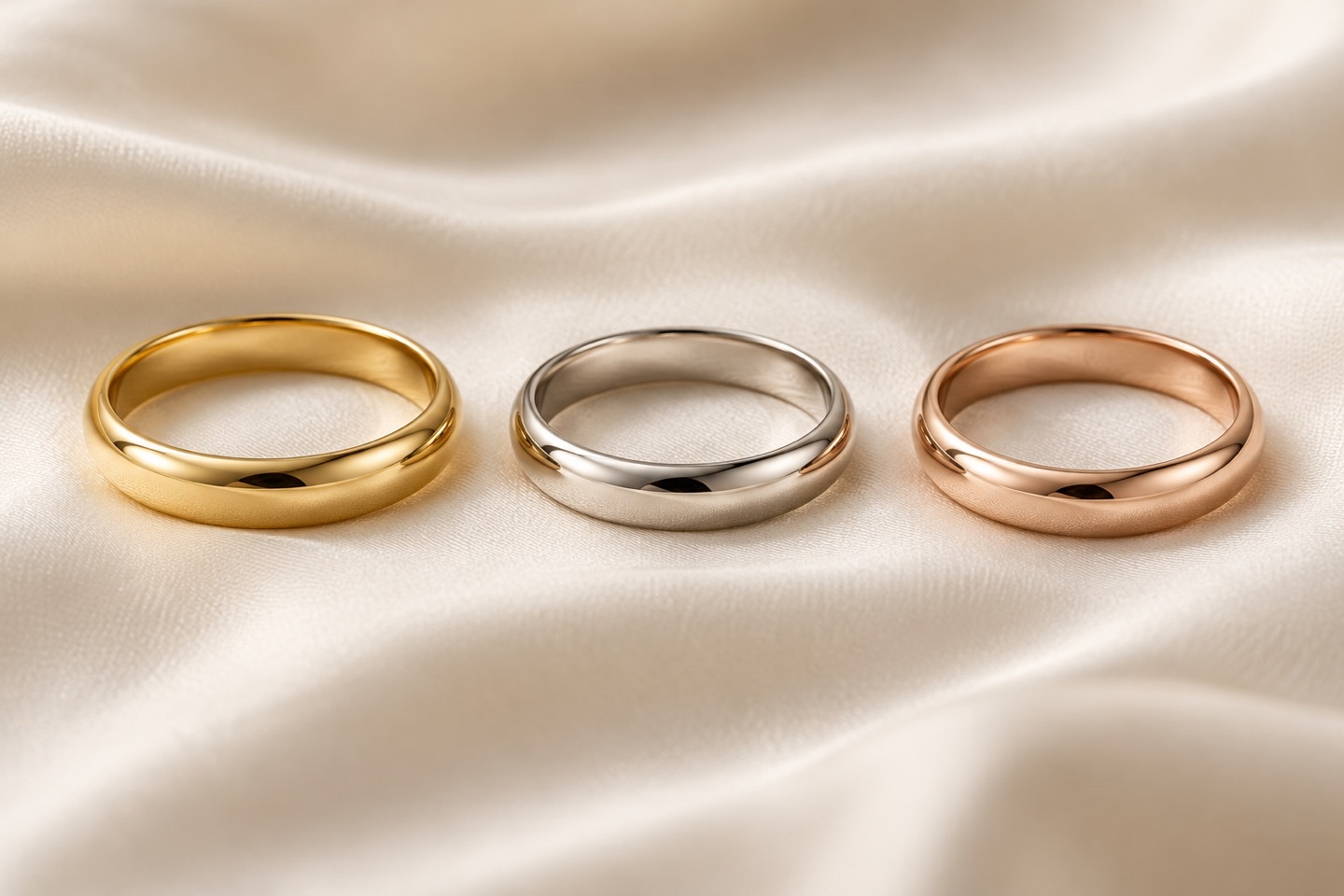
Karat and color are separate choices. Copper contributes to rose gold's pink tone; white gold uses white alloying metals and is often rhodium-plated. Compare actual pieces, since the precise alloy and finish affect their appearance.
Ask for care instructions for the complete piece, including gemstones and finishes. GIA recommends removing fine jewelry before entering a chlorinated pool or using household cleaners and storing pieces separately. For an October birthday gift, our opal and pink tourmaline guide offers stone-specific reading.
Further reading: GIA on gold colors and jewelry care.
Bring your questions to Gregorio Diamonds in Hialeah
You do not need every detail decided before you visit. Bring a favorite style reference, your budget and a few notes about how the jewelry will be worn. Our jewelry categories can help you gather ideas.
- What is the stated karat and fineness?
- Is the piece gold alloy throughout, gold-filled or plated, and is it hollow?
- How do its construction and finish suit the wearer's routine?
- What care should I plan for, and what should I understand if I later decide to sell?
Visit Gregorio Diamonds at 7664 NW 186th Street, Hialeah, FL 33015, in the Country Club Shopping Center. We welcome you to stop by, ask questions and tell us what you have in mind. View our showroom hours and directions to plan your visit.
Find your next piece in Hialeah
Bring your questions and a few style ideas. We look forward to welcoming you at Gregorio Diamonds.
Plan your showroom visit